
About the IAC
Vestibular schwannomas are the most common tumors of the cerebellopontine angle, accounting for approximately 8% of all intracranial tumors. Despite their prevalence and the clinical challenges they present, including hearing loss, vestibular dysfunction, and facial nerve impairment, fundamental questions regarding their biology, molecular mechanisms, and optimal management remain unanswered.
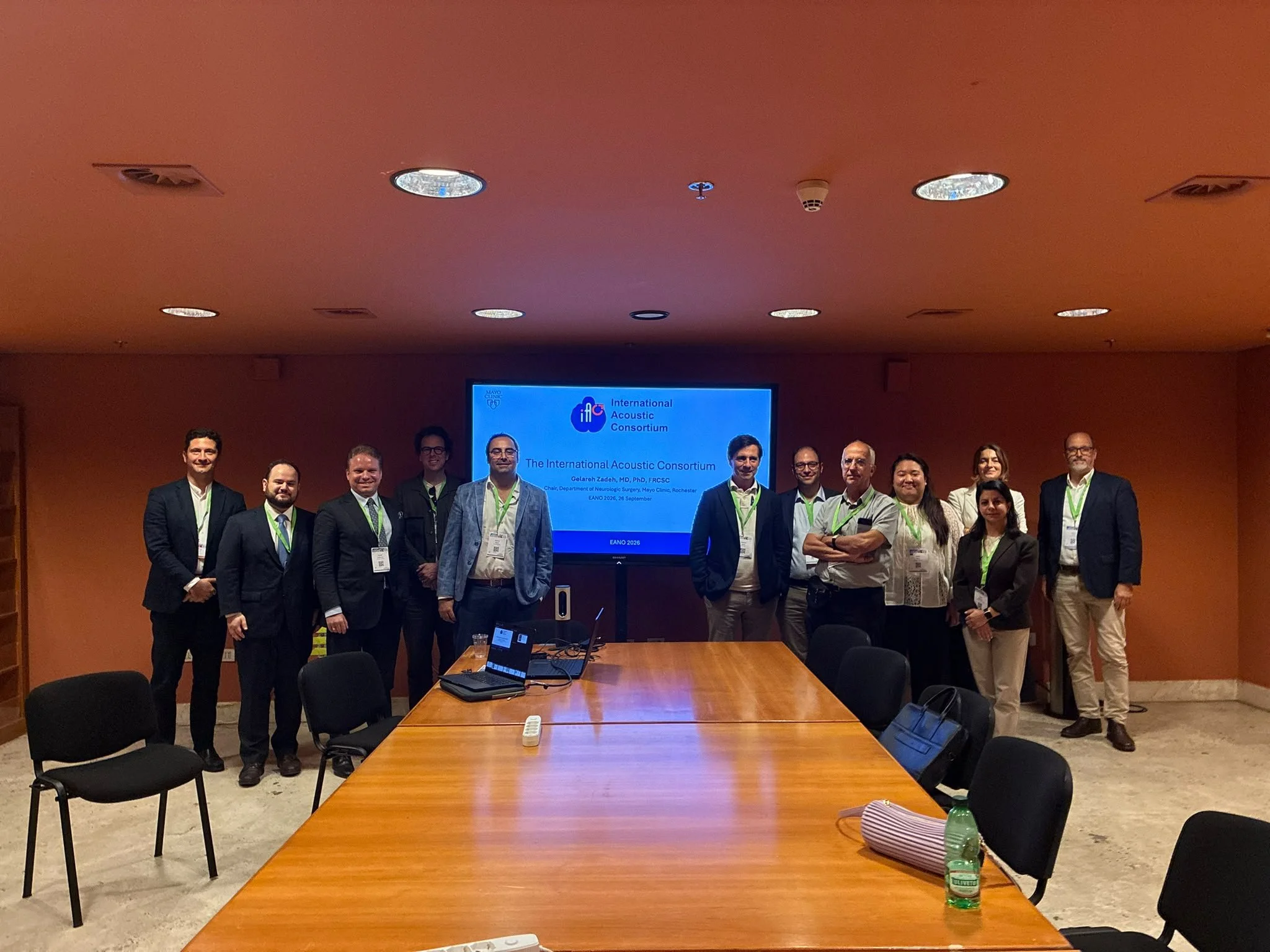
The International Acoustic Neuroma Consortium (IAC) is a multidisciplinary international collaborative established to advance the understanding and treatment of vestibular schwannomas through coordinated research. The Consortium brings together experts from academic centers across four continents, with expertise in neurosurgery, neuro-oncology, neuropathology, neuroradiology, radiation oncology, molecular and translational biology, bioinformatics, and biostatistics.
Our Mission
The IAC was formed to tackle key unanswered questions in vestibular schwannoma research. Through a multi-institutional database linking tumor tissue, biofluids, clinical annotation, and imaging data, the Consortium enables collaborative studies that would not be feasible within any single center.
Research Priorities
Research Priorities
Molecular Classification
Identifying distinct molecular subtypes of vestibular schwannoma through integrated transcriptomic, proteomic, and epigenomic analysis, with the aim of defining clinically relevant subgroups.
Hearing Loss
Understanding the molecular features of vestibular schwannomas associated with hearing loss through multi-omic analysis of tumor tissue correlated with pre-operative audiometric outcomes and imaging characteristics.
Radiation Response
Characterizing molecular mechanisms of resistance to stereotactic radiosurgery through comparative analysis of tumors that progress after radiation versus those managed with primary surgical resection.
Radiomics and Liquid Biopsy
Correlating molecular features of the tumor with imaging characteristics and circulating biomarkers, including cell-free tumor DNA methylation, to develop non-invasive diagnostic and prognostic tools.
Standardized Data Collection
Harmonizing clinical data collection across participating institutions through consensus-based common data elements and standardized data capture platforms to improve study comparability and support pooled analyses.
NF2-Associated vs Sporadic Vestibular Schwannoma
Delineating the biological, molecular, and clinical differences between NF2-associated and sporadic vestibular schwannomas through comparative multi-omic analysis, with the aim of identifying subtype-specific therapeutic vulnerabilities and informing tailored management strategies.
Quality of Life and Functional Outcomes
Evaluating the impact of vestibular schwannoma and its treatment on patient-reported quality of life, including hearing preservation, facial nerve function, vestibular rehabilitation, and psychosocial well-being, to inform shared decision-making and optimize long-term functional outcomes across management strategies.
Our Members
The IAC includes representatives from neurosurgical and neuro-oncology centers across North America, Europe, and Australia. The Consortium operates under principles of data sharing and collaboration, with institutional-level data governance to support multi-site research while respecting local regulatory requirements.
Interested in Joining?
The IAC welcomes new members from institutions with active vestibular schwannoma programs. If you are interested in participating, please contact us.